
The “clean-label” movement is taking the food industry by storm, and the seafood sector is no exception. Today’s consumers and chefs are looking for natural, high-quality ingredients, leading to a massive shift toward ” Additive-Free” shrimp.
But what does ” Additive-Free” actually mean for your plate, your health, and your business? Let’s dive into why the industry is moving away from chemically treated seafood.
What Exactly is “Additive-Free” Shrimp?
In the traditional seafood industry, shrimp are often treated with Moisture Retention Agents (MRAs), most commonly STPP (Sodium Tripolyphosphate). These chemicals alter the shrimp’s protein structure, forcing the muscle fibers to swell and absorb excess water.
While some claim this protects against freezer burn, its main purpose is to artificially inflate the weight of the shrimp. You end up paying for water, not premium protein.
For the chef or home cook, this chemical treatment ruins the cooking experience. Because the shrimp is water-logged, it releases all that excess liquid into the pan. Instead of getting a beautiful, caramelized sear, the shrimp ends up boiling in its own chemical juices.
The Kitchen Test: Additive-Free vs. Treated Shrimp
How can you tell the difference? Here is a quick breakdown:
| Attribute | Additive-Free Shrimp | Treated Shrimp |
| Flavor Profile | Sweet, natural, and full-bodied. | Muted, with a possible soapy or metallic “phosphate” aftertaste. |
| Texture | Firm, “snappy,” and naturally dense. | Bouncy, rubbery, or mushy due to structural breakdown. |
| Appearance | Naturally translucent and turns beautifully white and pink when cooked. | Glassy-looking, even after cooking. |
| Cooking Result | Holds its natural juices for a perfect, restaurant-quality sear. | Shrinks significantly and may “stew” in the water it releases. |
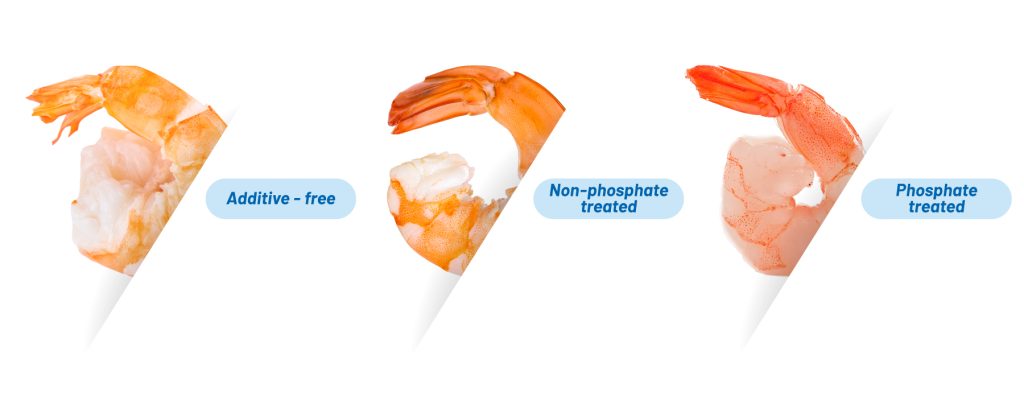
Today’s shrimp market can be tricky. “Non-phosphate treatment” can make shrimp look brighter and more attractive while keeping a natural-like taste. That’s why it is becoming more widely used. As a result, it can be difficult for buyers to tell the differences between shrimp products.
Three Kinds Of Shrimp
LP Foods has the answer
Led by Ms. Thanh, Head of Technical, our Technical Team can help customers identify each type of shrimp. We can also check if a factory’s products and processes align with the buyer’s standards.
Do you need a reliable shrimp supply all year round? Contact LP Foods today to learn about our wholesale and contract options.
